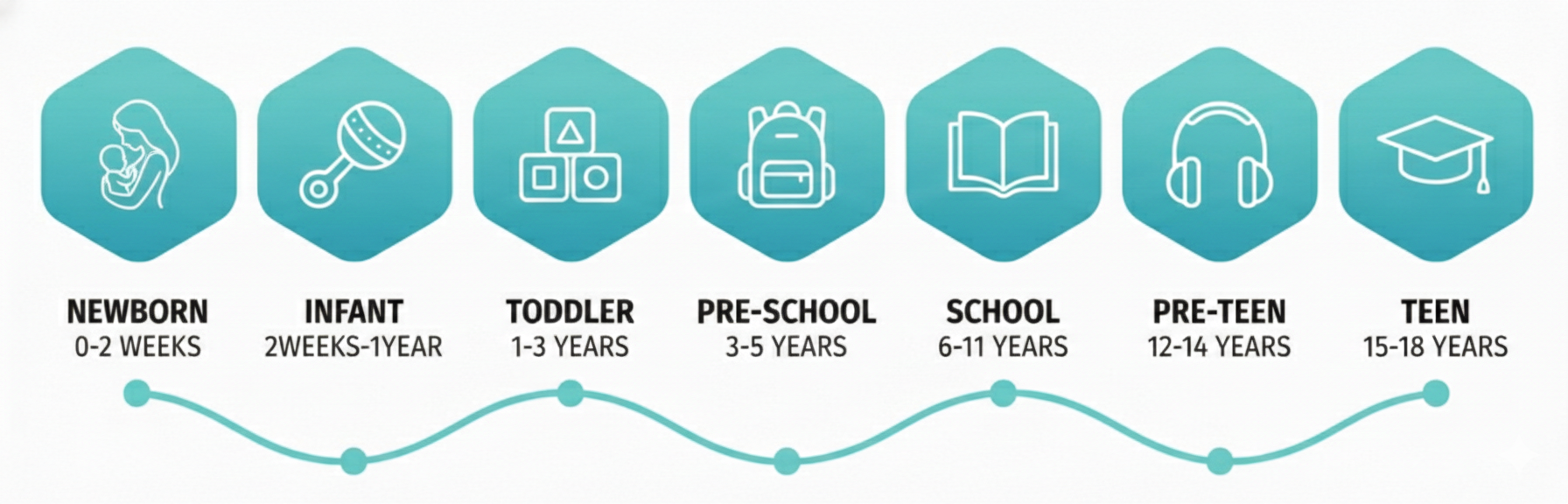
Call your doctor or go to the emergency room if your newborn:
- Refuses to feed or feeds very little
- Is unusually sleepy or hard to wake
- Has fever ≥100.4°F (38°C) or feels cold to touch
- Vomits green or blood-stained fluid
- Breathes fast, grunts, or seems to struggle to breathe
- Turns blue around lips or face
- Has yellow skin spreading to legs or looks worse after 3 days
- Has redness or pus around the umbilical cord
- Has shaking, twitching, or unusual movements
See your pediatrician if your baby:
- Has poor feeding or is not gaining weight
- Vomits repeatedly or has watery diarrhea
- Shows signs of dehydration (no tears, dry mouth, fewer wet diapers)
- Has fever ≥102°F (39°C) or any fever in babies under 3 months
- Breathes fast or has chest indrawing
- Is very irritable, floppy, or difficult to console
- Doesn’t smile by 2 months, roll by 6 months, or sit by 9 months
Contact your doctor if your child:
- Has a fever lasting more than 5 days
- Has persistent cough >3 weeks or night sweats
- Complains of headache with vomiting or early-morning headaches
- Loses weight, tires easily, or stops playing
- Has changes in vision, hearing, or coordination
- Has persistent pain, joint swelling, or limping
- Has abdominal pain waking them at night
Contact your doctor if your child:
- Has a fever lasting more than 5 days
- Has persistent cough >3 weeks or night sweats
- Complains of headache with vomiting or early-morning headaches
- Loses weight, tires easily, or stops playing
- Has changes in vision, hearing, or coordination
- Has persistent pain, joint swelling, or limping
- Has abdominal pain waking them at night
Pay attention if your pre-teen:
- Feels persistently sad, withdrawn, or talks about self-harm
- Has unexplained weight loss or extreme tiredness
- Faints or has chest pain during exercise
- Has ongoing bone or joint pain
- Has very irregular or heavy periods
- Starts using alcohol, vaping, or drugs
- Shows sudden drop in school performance or risky behavior
Pay attention if your teen:
- Feels persistently sad, withdrawn, or talks about self-harm
- Has unexplained weight loss or extreme tiredness
- Faints or has chest pain during exercise
- Has ongoing bone or joint pain
- Has very irregular or heavy periods
- Starts using alcohol, vaping, or drugs
- Shows sudden drop in school performance or risky behavior